Trigger
Promo for a five-session workshop launching in July.
A brand voice, a design system and a content pipeline wired into one system, built by Nadia Gorelikova. Every step is a file, every file has a place in the chain, and the numbers go back into the plan.
source of truth. Five skills read the same brand file before they write a word.
post templates with locked colour pairs and character limits, exported straight to PNG.
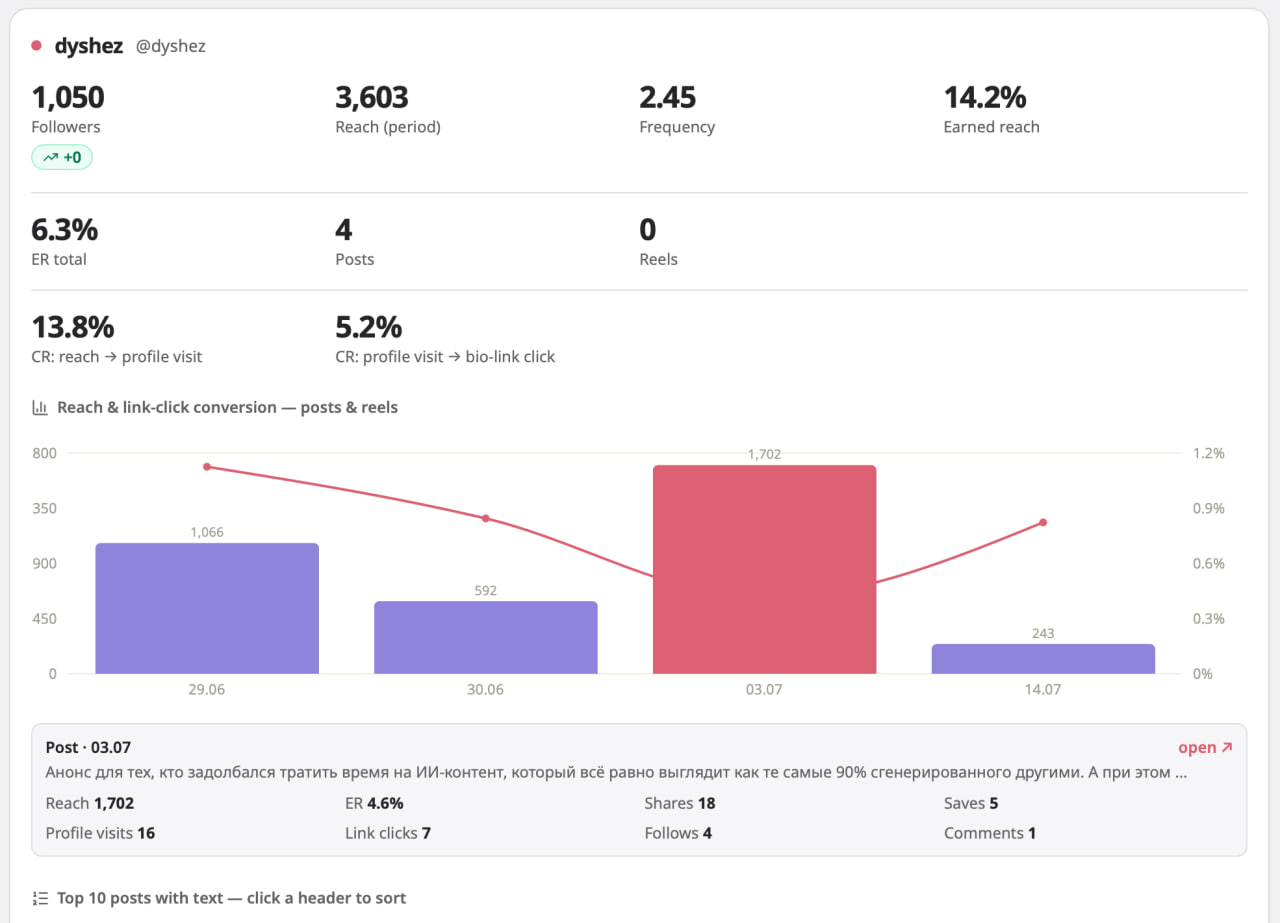
reach → profile visit on the live account, then 5.2% profile → link click.
Brand knowledge lives in one place and everything downstream reads from it. Design rules are code, not a PDF. Analytics return to the content plan, so the next month starts from the last one's numbers.
Voice, vocabulary, limits, checklists. tov.md and visual.md are what a new brand fills in.
Colour, type, 8pt grid, elevation. One CSS file, imported everywhere.
Rubrics, monthly plan, funnel split.
Platform posts, hooks, storyboards.
Voice check, AI-pattern cleanup, cuts.
Approved text → templates → PNG.
Optional human-in-the-loop station. 7 templates, locked colour pairs.
Each post tagged by funnel stage, format and CTA.
1080×1350 posts and 9:16 stories, ready to upload.
Built on the Instagram API. Inside signal: your own reach, ER and reach → visit → link conversion, per post.
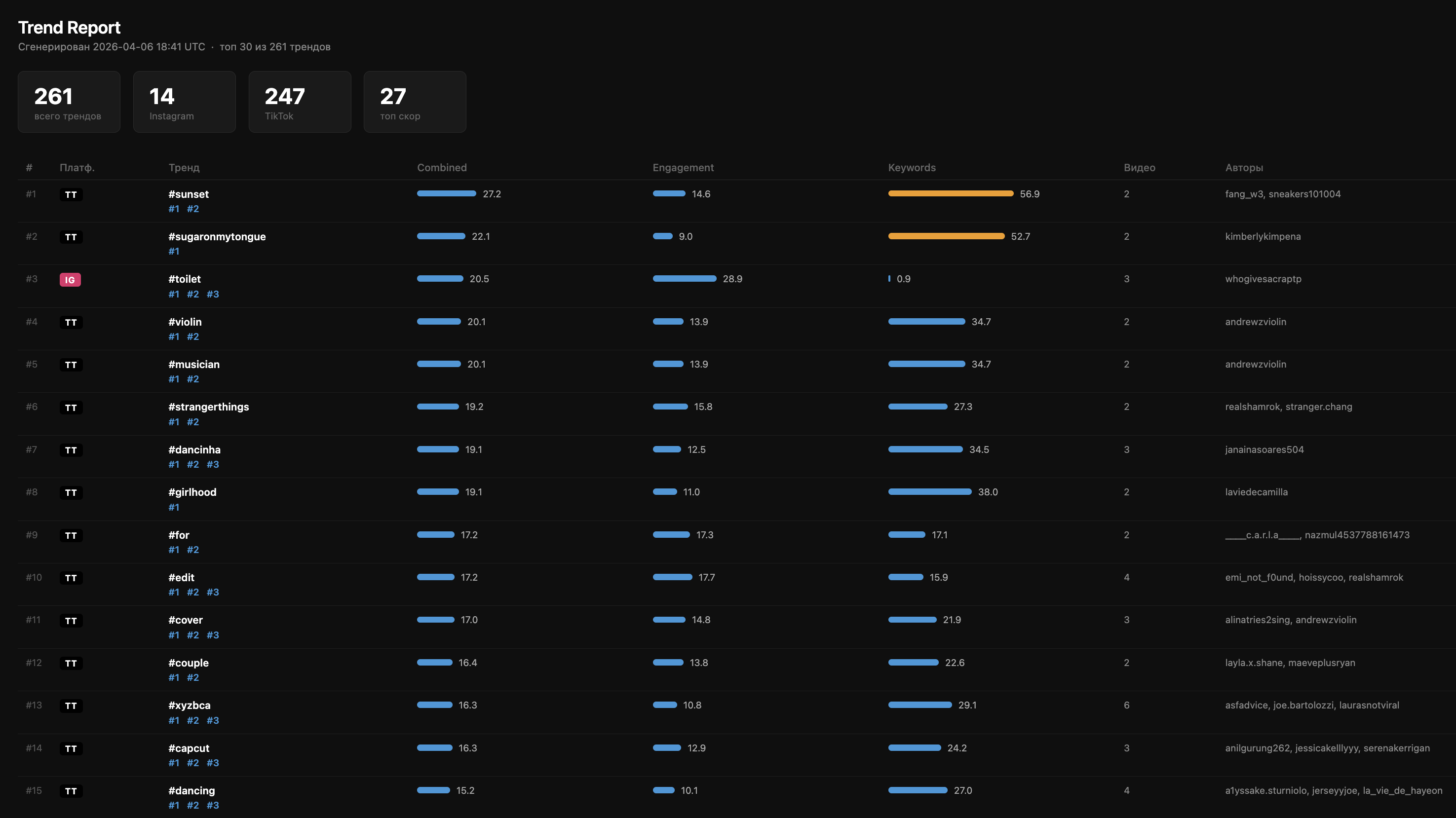
Outside signal: Apify collects Instagram and TikTok trends, Gemini turns them into adapted video briefs.
Feedback. Dashboard and trend scores go back into content-strategy.
The map above as a contract. Each node declares its input and its output, so any piece can be replaced without touching the rest.
| Node | Reads | Produces |
|---|---|---|
| brand-core | The brand brief, filled once into tov.md | Voice rules, vocabulary, banned patterns |
| content-strategy | brand-core, dashboard and trend data | Rubric map, monthly plan, funnel distribution |
| social / video | brand-core, the plan | Platform-ready copy, video scripts |
| carousel-export | brand-core, approved text | Carousel as PNG |
| copy-editing | brand-core, any draft | Draft cleaned against voice rules and AI clichés |
| Social sandbox (optional) | Design tokens, approved copy | Hand-finished carousels and stories as PNG or ZIP |
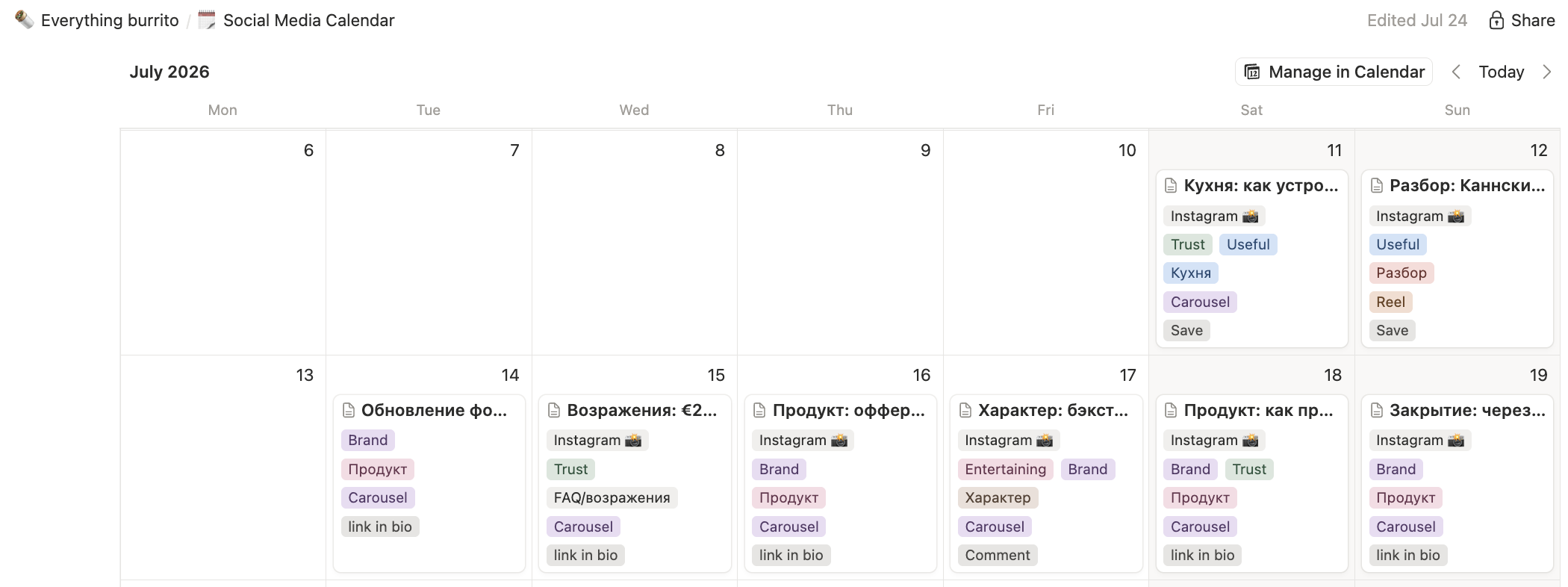
| Notion calendar | Plan and finished posts | Publishing schedule with funnel, format and CTA tags |
| Dashboard | Instagram API: account and post insights | Per-post reach, ER and conversion chain |
| Trend agent | Apify trend data, keyword list | Ranked trend report, adapted video briefs |
The difference between a prompt and a system is where the knowledge sits. Here it sits in one document that every skill opens before generating anything.
tov.md with examples, not rules. Examples travel further.brand-core.The visual system is digitised down to the constraint: tokens, templates, colour pairs, character limits. The carousel-export skill maps approved text onto templates, checks every field against its limit and renders PNG, so most content is produced without opening a tool.
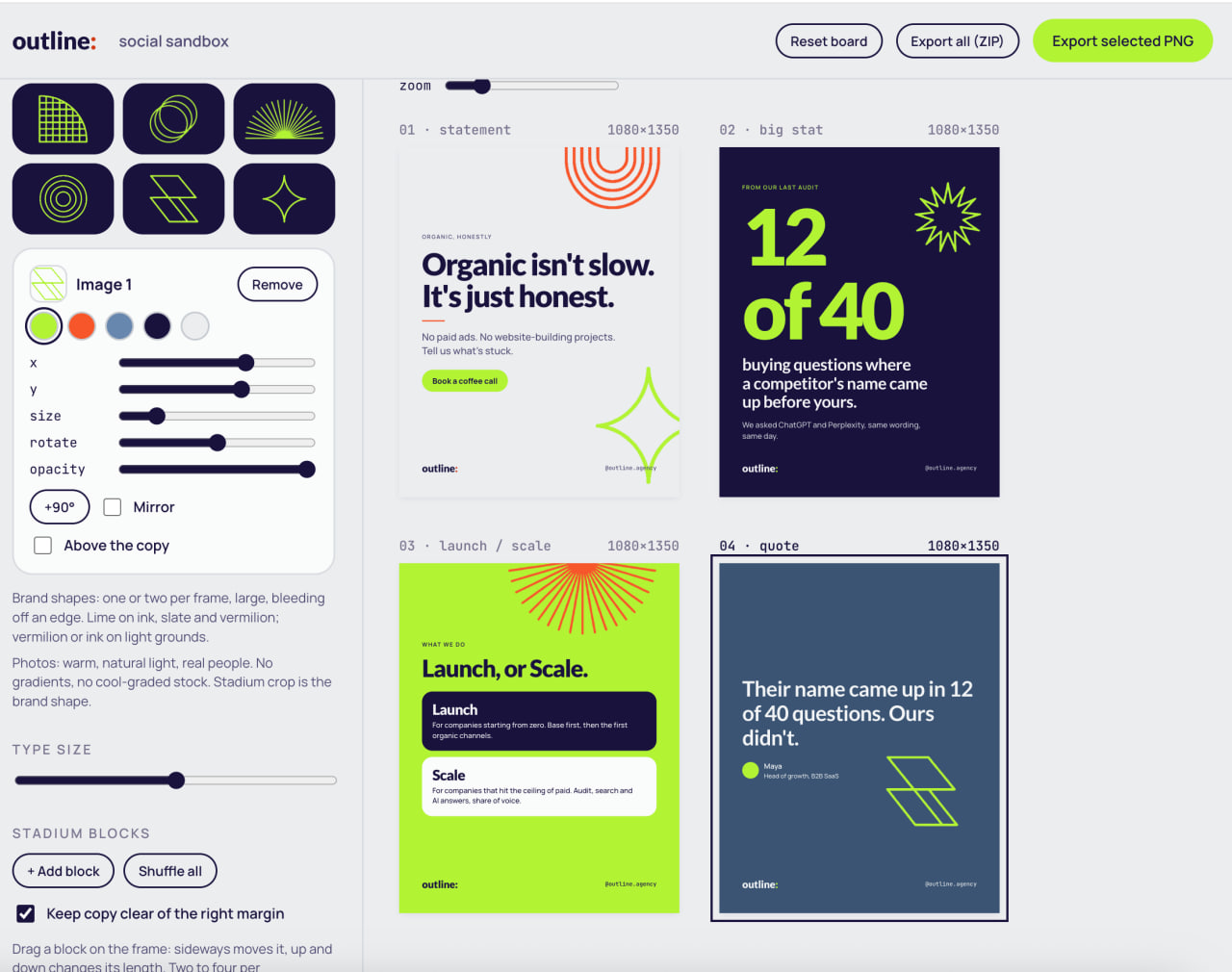
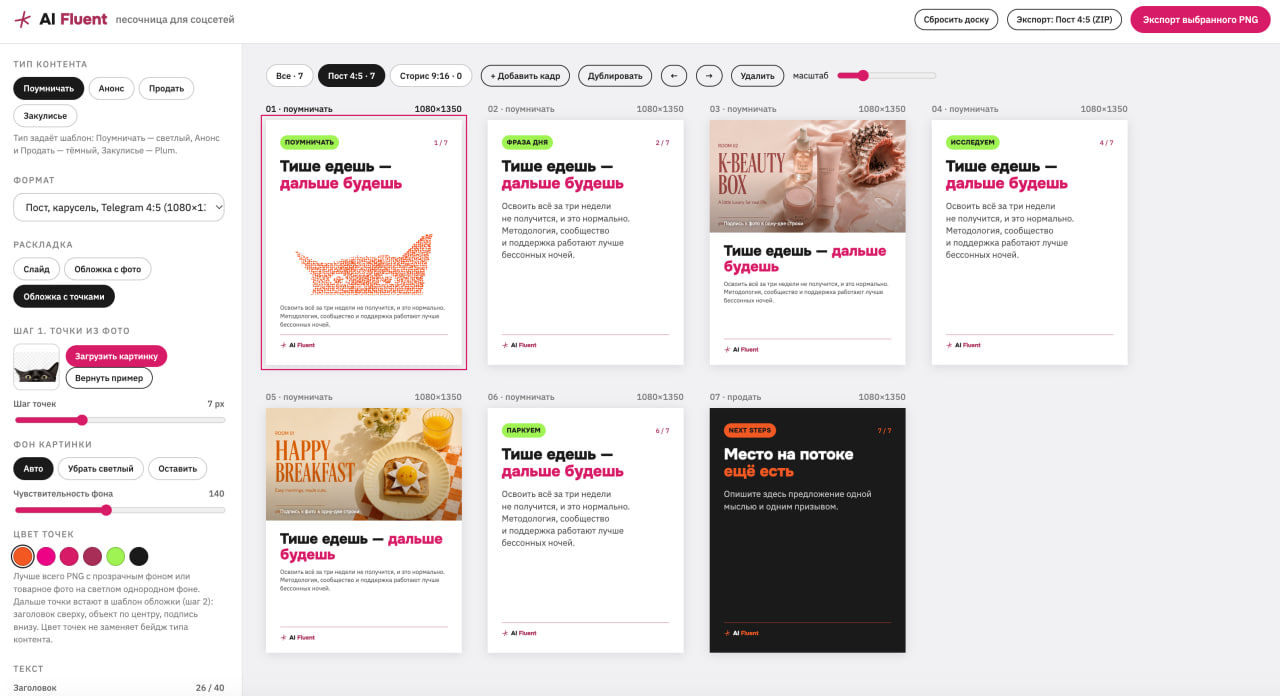
The sandbox is optional. It is a human-in-the-loop station for posts that need a person's eye, such as photo covers and key announcements. It enforces the same rules: approved colour pairs, a live counter against each template's limit, export at the correct size.
The content-strategy skill builds the rubric map and the month plan from brand-core, and the plan lands in Notion. I approve the map, the skill does the rest.
Two instruments close the loop. The dashboard is built on the Instagram API. It is the inside signal and reads the account the way a funnel is read: reach, then profile visit, then link click. The trend agent is the outside signal: Apify collects Instagram and TikTok trends, they are scored (261 in one run) and Gemini turns the strongest into video briefs adapted to the brand.
A single request triggers the whole path. My decisions sit at the checkpoints: the rubric map, the draft voice and, for the share of posts planned as human-in-the-loop (30% at most), the final visual. Everything else runs from the files.
Promo for a five-session workshop launching in July.
“Plan the month and write the announcement carousel.”
A month of on-voice content planned, designed and scheduled from one request. The checks that stay with me: positioning, tone and the last look at the visuals marked for human review, 30% of posts at most.
Live account, period 29.06 to 14.07, four posts.
reach → profile visit
profile visit → bio-link click
total ER
Small account, short window, and the funnel steps still convert at a clear rate. Business impact from a larger channel is in the TripleTen case: organic social grown into a $1M+ annual-bookings channel.
For other brands I either produce the visual identity with AI or take the one they already have, and translate it into brand tokens an agent can work with: palette, type, templates and a voice file. The skills are then adapted to the brand, or new ones are written for what makes it unique, so content production continues without me.
Brand tokens for the agent: a brand-shape layer, four templates, a voice file.
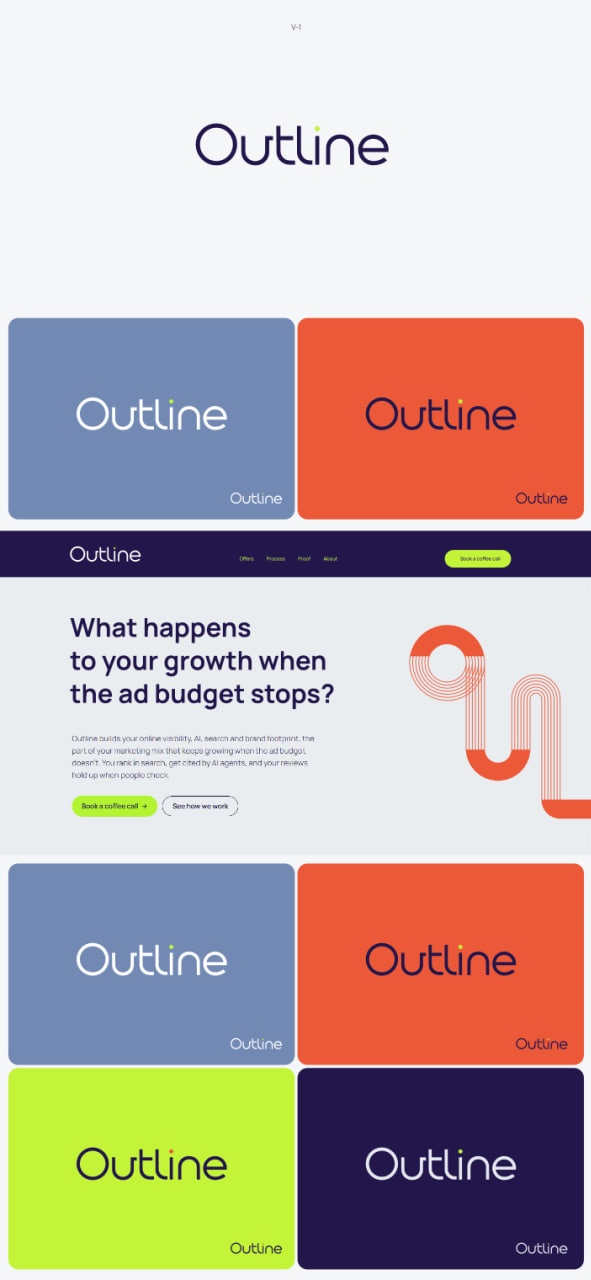
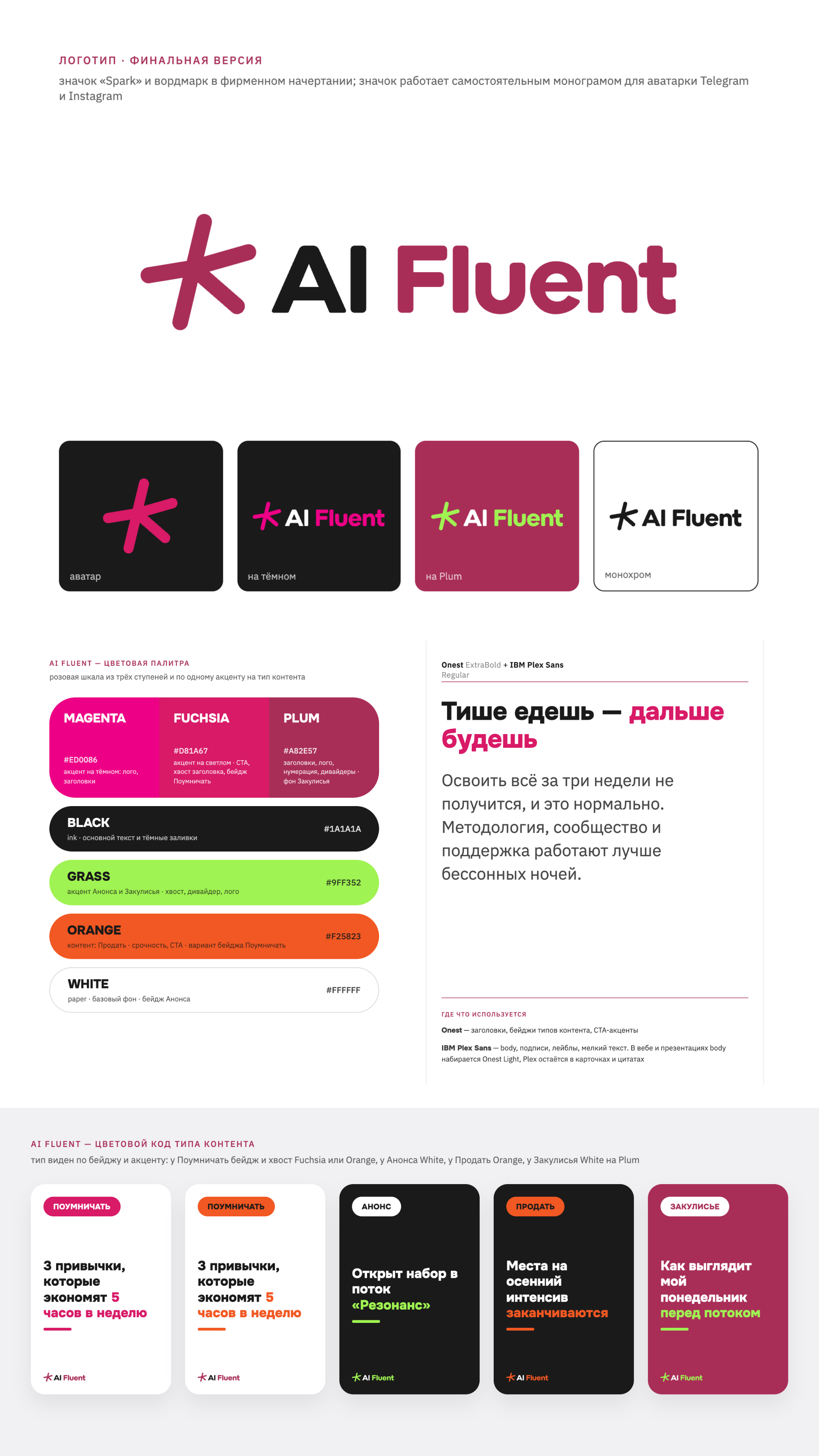
Brand tokens for the agent: a dot cover, a colour code per content type, a voice file.
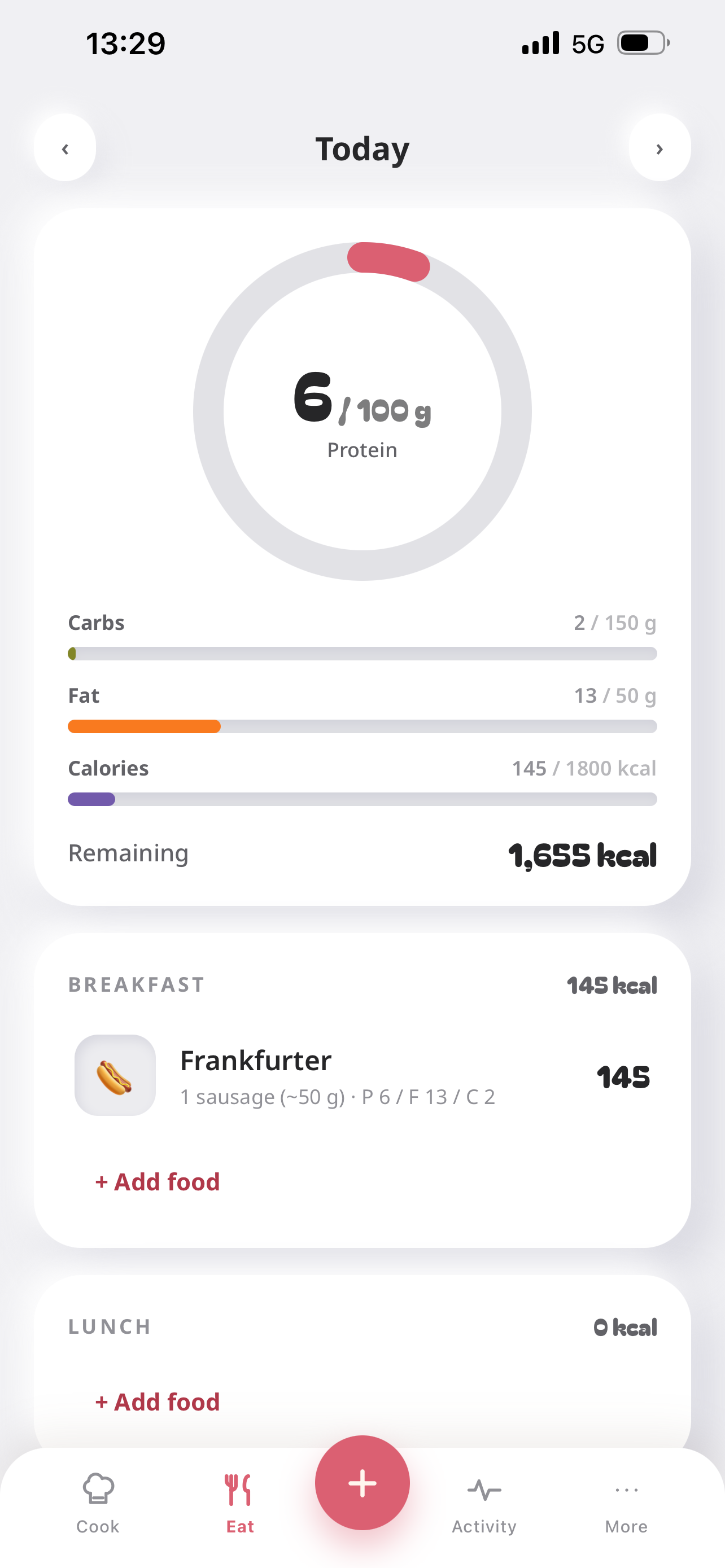
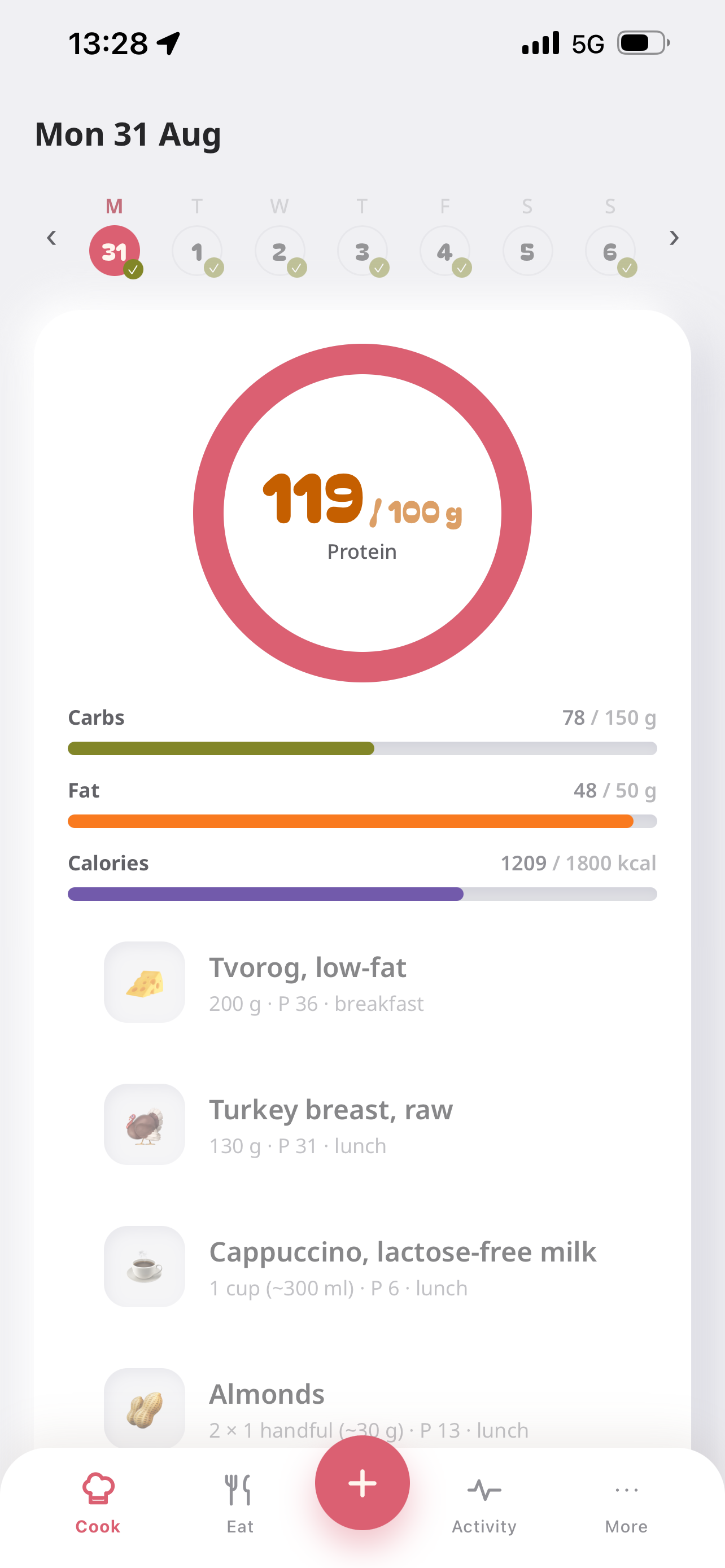
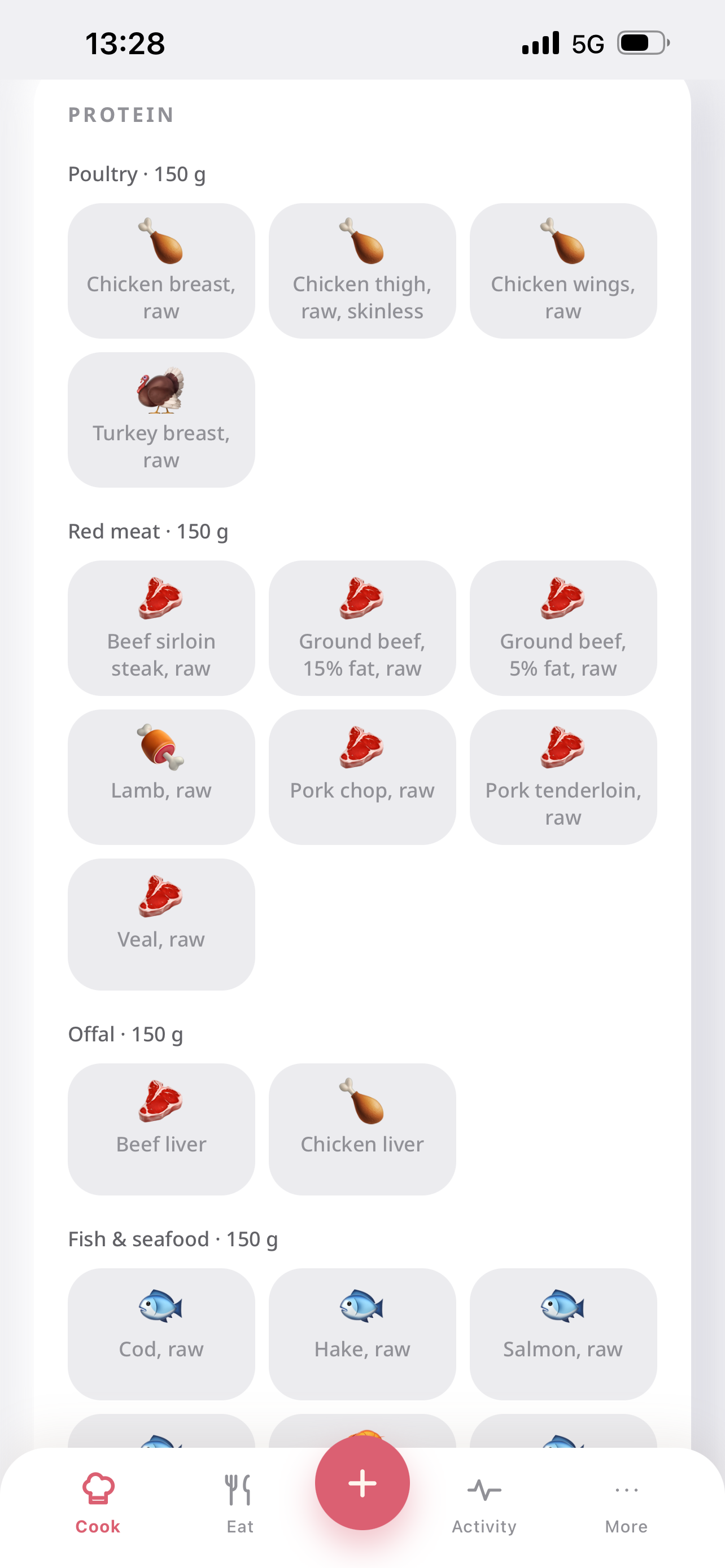
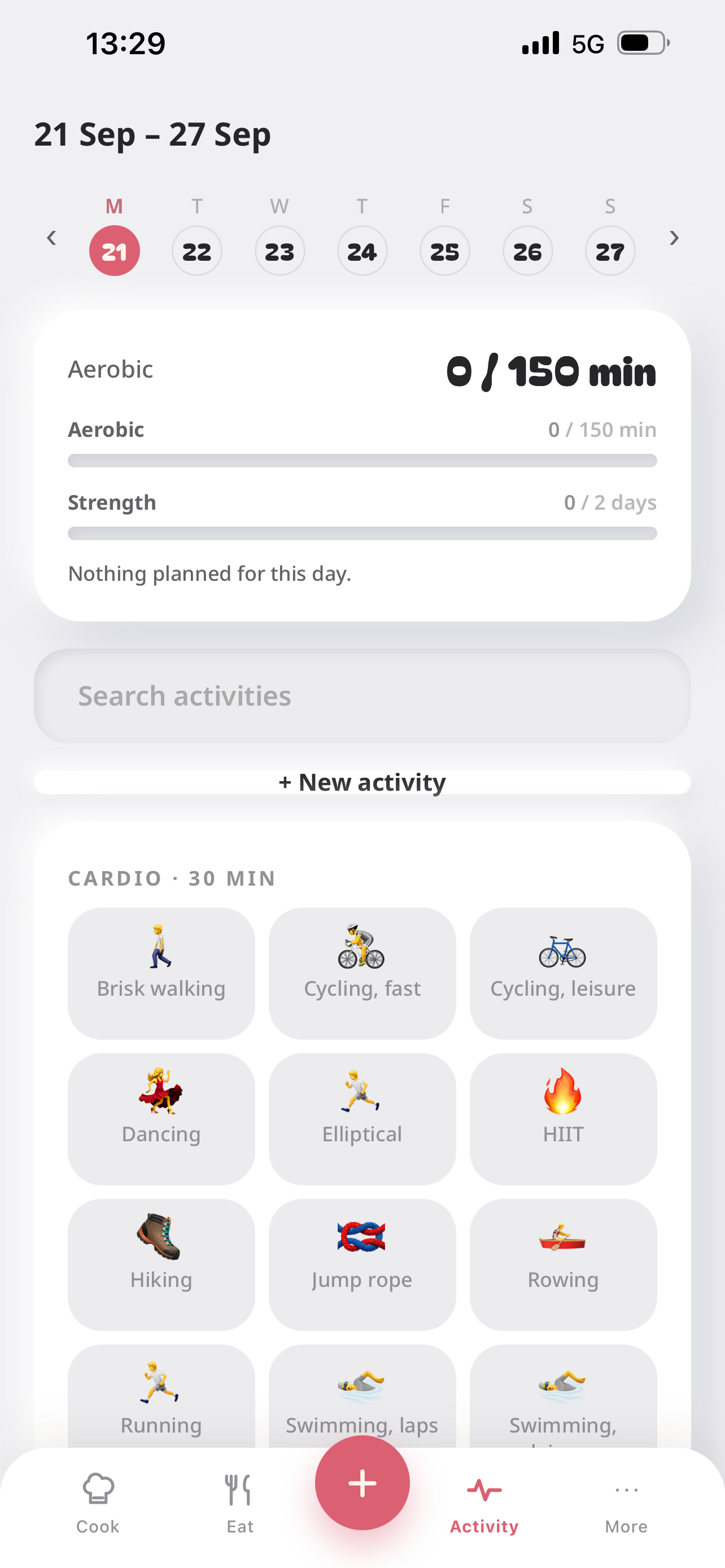
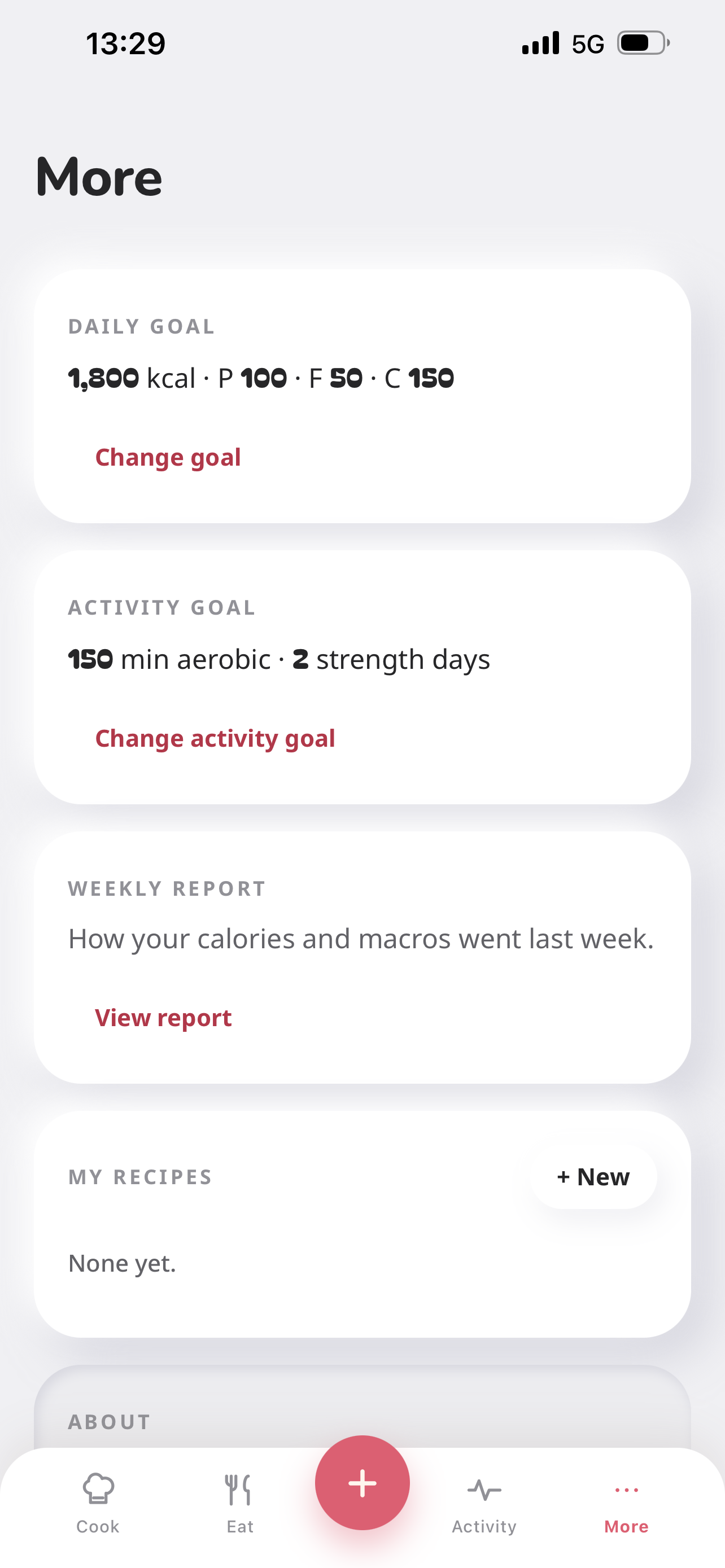
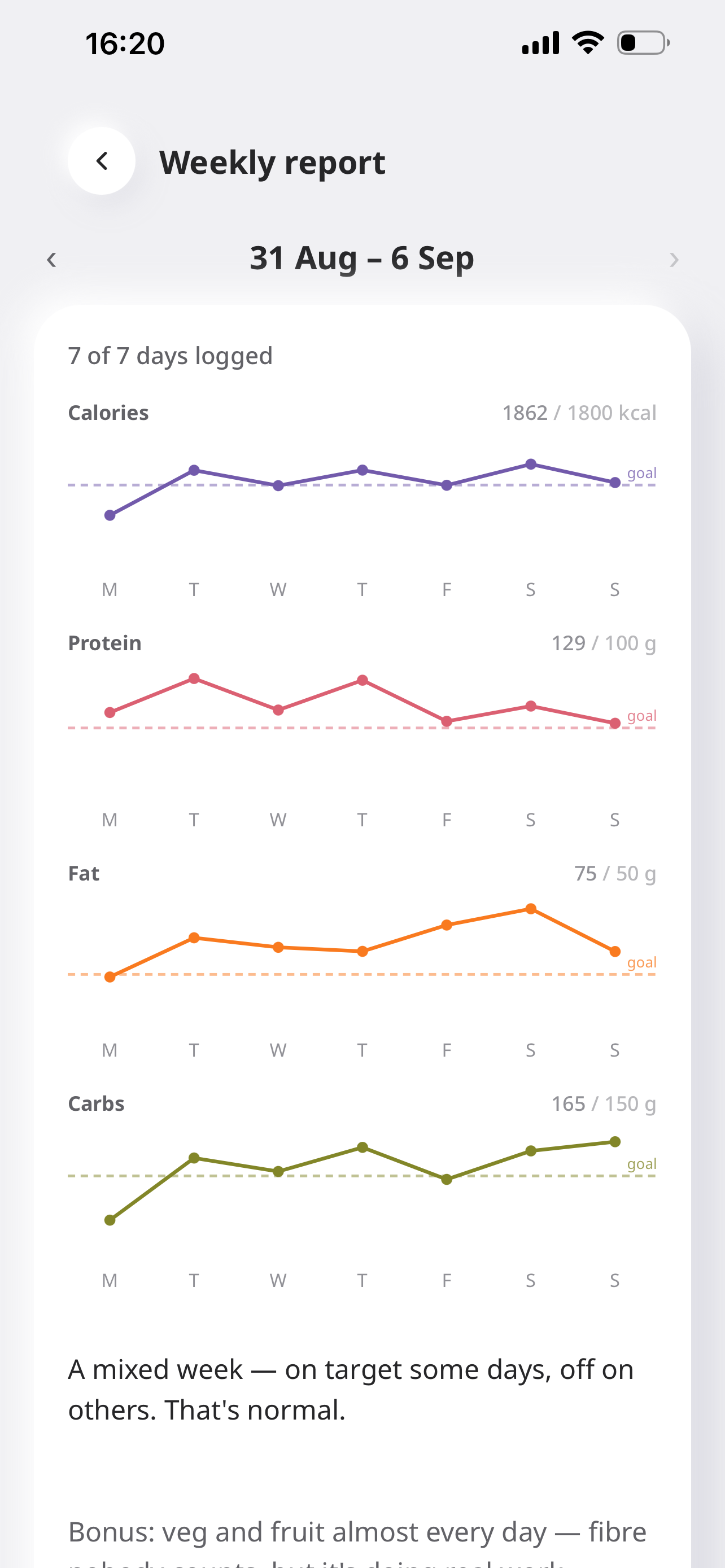
A calorie tracker I vibe-coded in a week. The design and the product logic are mine. Now in beta and backed by tests.
I build content and design systems that keep a brand producing.